

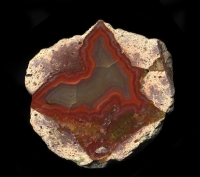
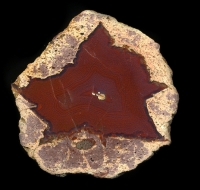
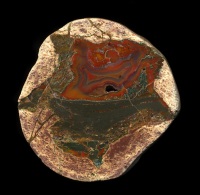
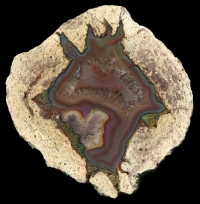
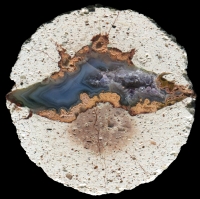
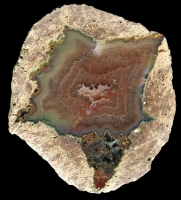
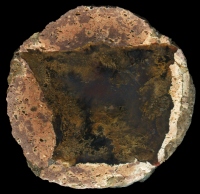
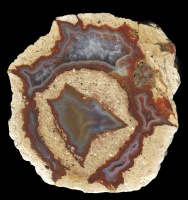
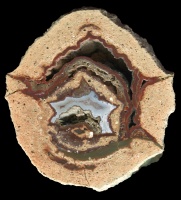
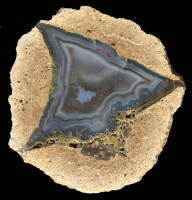
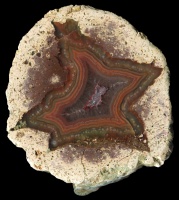
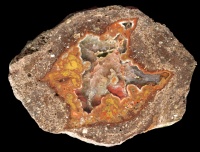
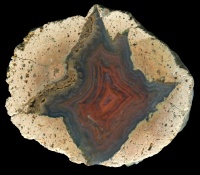
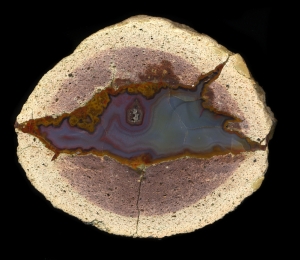
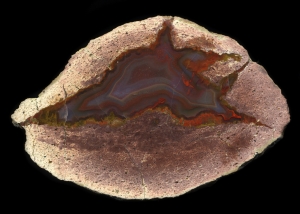
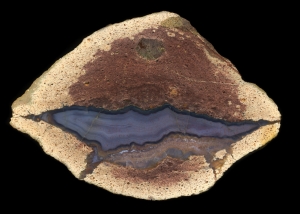
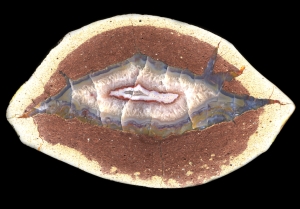
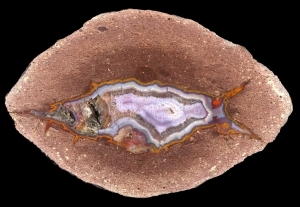
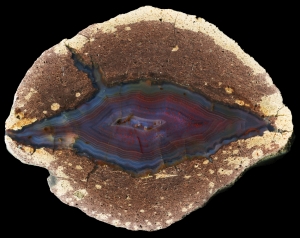
St. Egidien This location is famed for its vivid red colour. Nothing can come close to the St Egidien agates for their red hot warmth and these agates just love to be photographed. Cameras really go nuts over these colours, giving results that blaze with glory but are perhaps less than realistic. Hence, the main shots here are scanned. There is a distinct gradation of form as the stones get larger. The smaller stones tend to be star-shaped - round thundereggs with a classic core of agate and/or crystal. However, when they get larger, they begin to form into something very distinctive. The big St Egidien stones are characteristically elongated and shaped like an eye, with an end to end fissure of agate. Perhaps unusually, the big St Egidiens are less untidy than the smaller ones! In most stones, the bigger they are, the more room there is for irregularity and 'imperfection' - but here, there is a wholeness and substance that the small ones almost never have. Fantastic things! I quickly nicknames the big stone the 'St Egidien Eyes'. They are not particularly rare, offered for sale quite frequently at various prices - but these big stones have a real presence. Possibly the most dramatic specimens that Germany produces. The agate is complex in the extreme and very variable, with diverse agate, crystal and mineralization - though it is defined by that bright red. This red is characterized by not being a pure coloured stone but made up of a dense speckling of red in clear agate, resulting in some of the most amazing close-up worlds I have ever seen (see the simple red stone in the first line below). The brecciated 'mess' that is often present is not so unusual for german locations, but they are one of the few (that I have seen) that are prone to mineralization and moss. The St Egidien location is closed - and very much out of reach, I am told. However, fortunately tons of these stones were extracted (with a big power shovel) before the site went offline, meaning that it remains the commonest and easiest German stone to find on the market. There are apparantly 4 beds here, though in my experience the tags are rarely more specific than just "St Egidien". The beds are Eastfield, Kuhschnappel, Nickelhütte and Westfield. These stones are arranged from small to large. Because of the dramatic size of some of these stones, I felt justified in allowing myself larger images on the biggest, to really give them a chance to show off. So expect some heavy pages in this gallery! |
Small St Egidien Thundereggs |
||
Small St Egidien |
Interesting brecciated and Mineralized St Egidien |
|
Vivid red and crystal egg |
Soft and Crystaline St Egidien Thunderegg |
A quieter and more complex specimen. A pale St Egidien |
Simple St Egedien Geode |
Lovely Small St Egidien Thunderegg with Orbs and a Darker Matrix |
St Egidien Thunderegg with Complex Core |
Small but Almost Perfect St Egidien Thunderegg |
Small but almost Perfect St Egidien Thunderegg with Yellow agate |
St Egidien Thunderegg with Green Silicified Mud |
St Egidien Thunderegg with Subtle Colours |
Flaming Red St Egidien Thunderegg |
St Egidien Thunderegg with Unusually Clear Agate |
Beautiful Larger St Egidien Thunderegg |
Small St Egidien Thunderegg with Amethyst |
St Egidien Thunderegg with Filigree/Lace Patterns |
St Egidien Thunderegg with Moss in Clear Agate |
Colourful Atol St Egidien Thunderegg |
Hollow Atol St Egidien Thunderegg with Rare Pale Agate |
Larger St Egidien Thunderegg with a Fine Pale Agate and Crystal Core |
St Egidien Thunderegg with a Highly Complex Core |
Colourful St Egidien Thunderegg with Yellow Plume |
St Egidien Thunderegg with Swirled Agate Core |
||
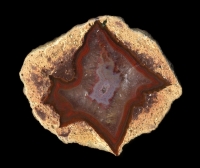
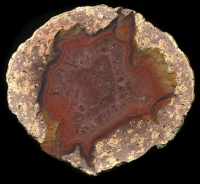
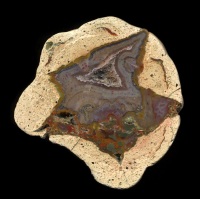
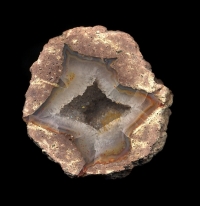
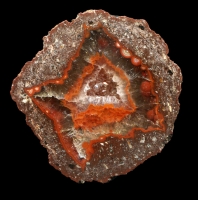
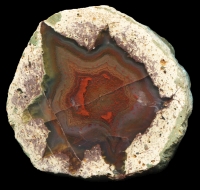
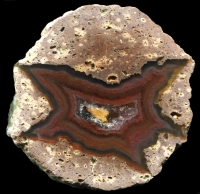
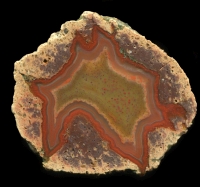
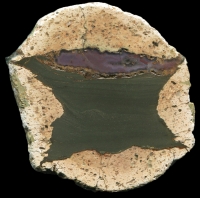
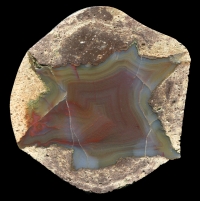
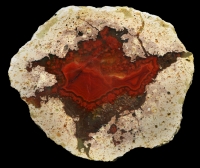
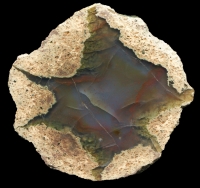
 |
Large Lenticular St Egidien Thundereggs |
|
Large and colourful St Egidien |
Large and very warm specimen |
Large St Egidien |
Massive St Egidien with Creamy Crystalline Centre |
Truely Massive and Very Heavy St Egidien Thunderegg - 25cms! |
Large St Egidien Thunderegg with Solid Agate - Red Dots on Blue-Grey. |
Countries:
USA - Canada - Alaska - Mexico - Argentina - Peru - France - Germany - UK - Poland - Greece - Turkey - Romania - Bulgaria - Slovakia - Kazakhstan - Uzbekistan - Russia - Japan - Ethiopia - Iran - Australia - Unknown